Dive into the essential Roblox Studio function CollisionGroupSetCollidable a powerful tool for advanced game development. This guide provides an in-depth look at how creators can precisely control object interactions within their experiences. Understanding and implementing collision groups allows developers to optimize performance create intricate gameplay mechanics and prevent unwanted physical interactions between specific parts. Whether you are building complex physics puzzles interactive environments or simply fine-tuning character movement mastering this function is crucial. Explore practical examples and best practices to seamlessly integrate CollisionGroupSetCollidable into your Roblox projects. Enhance your development workflow and deliver more polished immersive games to players. This information is vital for both new and experienced Roblox developers aiming for professional-grade game behavior. Learn why collision management is key to preventing bugs and improving player experience. Discover how to create unique gameplay by enabling or disabling collisions dynamically.
Related games- How to Get 6 Stars in GTA 5 Your Ultimate Guide
- Guide to Butterfly Roblox IDs: Find Your Perfect Vibe!
What exactly is CollisionGroupSetCollidable in Roblox and how does it work?
CollisionGroupSetCollidable is a powerful function in Roblox's PhysicsService that allows developers to precisely control how different sets of objects, called 'collision groups', interact physically. Instead of setting collisions for individual parts, you create groups (e.g., "Players", "Projectiles", "Environment"), assign parts to them, and then use CollisionGroupSetCollidable to specify which groups can or cannot collide with each other. This optimizes physics calculations by limiting unnecessary checks, leading to smoother gameplay and enabling complex interaction rules.
Why should I use CollisionGroupSetCollidable instead of just CanCollide for managing physics in my Roblox game?
While CanCollide works for individual parts, CollisionGroupSetCollidable provides a far more organized and performant solution for complex games. CanCollide only allows you to turn collisions on or off for a single part. CollisionGroupSetCollidable manages interactions between *entire categories* of objects, reducing the physics engine's workload significantly. This translates to better frame rates, especially in games with many parts, and allows for intricate, custom collision behaviors that would be impossible or highly inefficient with just CanCollide alone.
How do I properly set up and use Collision Groups in Roblox Studio before calling CollisionGroupSetCollidable?
First, access PhysicsService using `game:GetService("PhysicsService")`. Next, create your collision groups with `PhysicsService:CreateCollisionGroup("GroupName")` for each distinct category of objects (e.g., "Players", "Obstacles"). Finally, assign each relevant part in your game to its respective group by setting its `CollisionGroup` property to the group's string name, like `myPart.CollisionGroup = "Players"`. Once groups are defined and parts assigned, you can then use CollisionGroupSetCollidable to dictate their interactions.
What are some advanced scenarios where CollisionGroupSetCollidable becomes essential for complex Roblox games?
CollisionGroupSetCollidable is vital for advanced mechanics like creating 'phasing' abilities where players can temporarily pass through specific objects. It's also crucial for managing projectile physics, ensuring bullets only hit enemies and not teammates, or for implementing custom hitboxes where certain body parts have different collision properties. For complex simulations, custom vehicle physics, or intricate puzzle games with unique object interactions, this function provides the precision and performance needed to deliver a polished, immersive experience.
Can using CollisionGroupSetCollidable improve my Roblox game's performance and reduce lag?
Yes, absolutely! CollisionGroupSetCollidable significantly boosts game performance by reducing the number of collision checks the Roblox physics engine needs to perform. Instead of checking every single part against every other part, the engine only checks collisions between groups you've specified as 'collidable'. This optimization frees up CPU resources, leading to higher frame rates, less lag, and a much smoother, more enjoyable experience for players, especially those on less powerful devices or with unstable internet connections.
Are there any common mistakes or debugging tips when implementing CollisionGroupSetCollidable in Roblox scripts?
A common mistake is forgetting to assign parts to collision groups after creating them, leading to default collision behavior. Also, misremembering that `CollisionGroupSetCollidable` is symmetrical (setting GroupA not to collide with GroupB also means GroupB won't collide with GroupA) can cause confusion. For debugging, use `PhysicsService:GetCollisionGroups()` to verify your active groups and `part.CollisionGroup` to check individual part assignments. Print statements or the debugger can help trace where collision rules are being applied or misapplied in your scripts.
How does CollisionGroupSetCollidable enhance specific gameplay mechanics like custom character interactions or unique physics puzzles?
CollisionGroupSetCollidable dramatically enhances custom mechanics by allowing designers to dictate exact interaction rules. For character interactions, you could have a 'ghost' character group that passes through walls (WorldGeometry) but still collides with 'Interactables'. For physics puzzles, you might have specific 'Key' objects that only collide with 'Lock' platforms, while other elements pass through. This precision enables the creation of highly imaginative and complex gameplay systems that feel responsive and intentional, opening up entirely new design possibilities for engaging player experiences.
Ever felt frustrated by player characters clipping through walls or objects getting stuck in weird places in your Roblox game? Or perhaps you're a gamer who just wants a smoother, more polished experience without random physics glitches. You're not alone. Many of us, balancing careers, families, and a craving for quality gaming, find these small imperfections distracting. With 87% of US gamers playing regularly, often dedicating 10+ hours a week, we value our precious gaming time and expect a seamless virtual world. That's where a powerful Roblox Studio function called CollisionGroupSetCollidable comes in, a hidden gem for optimizing game performance and creating truly immersive worlds.
Forget about the old days of basic CanCollide properties; CollisionGroupSetCollidable takes collision management to a professional level. This advanced feature allows you to define specific interaction rules between different groups of objects, giving you unparalleled control over your game's physics. No more invisible walls where they shouldn't be, no more performance hits from unnecessary collision checks. This guide will walk you through how to master CollisionGroupSetCollidable, ensuring your creations run smoothly, look great, and provide the refined experience that busy adult gamers truly appreciate, making your game a relaxing escape rather than a source of new frustration.
What exactly is CollisionGroupSetCollidable in Roblox Studio?
CollisionGroupSetCollidable is a powerful function within Roblox Studio's PhysicsService that grants developers granular control over how different sets of objects interact physically. Instead of simply turning collisions on or off for individual parts, this function allows you to define 'collision groups' and then specify whether objects belonging to one group can collide with objects from another group. Think of it as creating custom interaction matrices for your game's physics. This means you can have a 'Player' group not collide with a 'Ghost' group, but both can still collide with a 'World' group, all without complicated individual part scripting.
This method is far more efficient and organized than setting CanCollide on every single part. It simplifies complex physics interactions, reduces the number of collision checks the physics engine has to perform, and ultimately contributes to a more stable and performant game. For gamers who enjoy complex simulations or competitive experiences, this behind-the-scenes optimization translates directly into smoother gameplay and less lag, which is critical when every frame counts.
Why is CollisionGroupSetCollidable important for Roblox game development?
CollisionGroupSetCollidable is crucial for several reasons, particularly for creating professional-grade Roblox experiences. Firstly, it offers precision. You can prevent specific unwanted interactions, like a decorative item interfering with a player's movement, or a projectile passing harmlessly through a team member but impacting an enemy. This level of detail elevates the realism and predictability of your game's physics, making it feel more polished.
Secondly, it's a significant performance optimizer. When you use collision groups, the Roblox physics engine doesn't have to check for collisions between every single object in your game. Instead, it only checks interactions between specified groups. This drastically reduces the computational load, especially in games with many parts or complex environments. For gamers on mobile devices or those with budget-friendly hardware, this optimization can be the difference between a playable experience and a frustrating, lag-ridden one. In today's cross-play world, where mobile gaming dominates a significant portion of the player base, optimizing performance is not just a nice-to-have, it's a necessity.
Lastly, it enhances gameplay possibilities. You can design unique mechanics where certain elements behave differently based on their collision group status. Imagine a 'phase-through' ability, or environmental hazards that only affect specific types of characters. This tool opens up a new realm of creative potential for developers looking to build innovative and engaging experiences that stand out in the vast Roblox universe.
How do you create Collision Groups in Roblox?
Creating collision groups in Roblox Studio is a straightforward process handled through the PhysicsService. You don't create them directly within your game world, but rather define them using a specific service.
Here's a step-by-step guide:
Access PhysicsService: In a script (either a Server Script or a Local Script, depending on your needs, though server-side is typical for physics management), you'll need to get the PhysicsService. You do this by calling
game:GetService("PhysicsService").Create New Collision Groups: Use the
CreateCollisionGroup(groupName)function. This function takes a string as an argument, which will be the name of your new collision group. For example:PhysicsService:CreateCollisionGroup("Players")orPhysicsService:CreateCollisionGroup("Projectiles"). You can create as many unique groups as your game requires, up to a maximum of 32.Assign Parts to Collision Groups: Once you have created your groups, you need to assign individual parts or models to them. Each BasePart has a property called
CollisionGroup. You set this property to the string name of the group you want it to belong to. For instance:part.CollisionGroup = "Players". Remember to apply this to all relevant parts, often iterating through models or collections of parts.Initial Collision State: By default, when you create new collision groups, they will collide with all other existing collision groups, including themselves. This is important to remember as you will then use CollisionGroupSetCollidable to modify these default interactions.
It's generally a good practice to define your collision groups at the start of your game or specific game modes. This ensures consistency and prevents runtime errors. For instance, a player who joins a game expects their character to immediately follow the defined collision rules, not to have them applied mid-game and potentially cause unexpected behavior.
What's the syntax for CollisionGroupSetCollidable and how do you use it?
The syntax for CollisionGroupSetCollidable is quite intuitive once your collision groups are established. It's a method of the PhysicsService and takes three arguments:
PhysicsService:CollisionGroupSetCollidable(group1Name, group2Name, canCollide)
group1Name (string): The name of the first collision group.
group2Name (string): The name of the second collision group.
canCollide (boolean): A boolean value (true or false) indicating whether parts in
group1Nameshould collide with parts ingroup2Name. Set totruefor collisions,falseto disable them.
Here's an example:
local PhysicsService = game:GetService("PhysicsService")
PhysicsService:CreateCollisionGroup("PlayerCharacters")
PhysicsService:CreateCollisionGroup("GhostEnemies")
PhysicsService:CreateCollisionGroup("WorldGeometry")
-- By default, PlayerCharacters will collide with GhostEnemies. Let's disable that.
PhysicsService:CollisionGroupSetCollidable("PlayerCharacters", "GhostEnemies", false)
-- Ensure PlayerCharacters still collide with the World. (This is default, but good for clarity)
PhysicsService:CollisionGroupSetCollidable("PlayerCharacters", "WorldGeometry", true)
-- Ghosts should still collide with the World.
PhysicsService:CollisionGroupSetCollidable("GhostEnemies", "WorldGeometry", true)
Crucially, the relationship is symmetrical. Setting group1 to not collide with group2 also means group2 will not collide with group1. You don't need to call it twice with the group names swapped. This function is typically called once at the start of your game or when a new game mode is initiated to set up the initial collision rules. Dynamic changes during gameplay are also possible but require careful management to avoid unexpected behavior.
Can CollisionGroupSetCollidable improve game performance in Roblox?
Absolutely, CollisionGroupSetCollidable is a significant tool for boosting game performance in Roblox, especially in complex or large-scale games. When the Roblox physics engine processes interactions, it has to perform checks to see if any two parts are overlapping or about to overlap. Without collision groups, the engine might be checking every single part against every other single part, leading to a massive number of calculations.
By using collision groups, you tell the engine explicitly which groups of objects *don't* need to collide with other groups. For example, if you have a 'DecorativeProps' group and a 'SkyBox' group, you can set them to never collide. The physics engine will then skip all collision checks between parts in these two groups entirely. This drastically reduces the number of computations, freeing up CPU cycles. For the typical gamer balancing work and play, performance directly impacts enjoyment. A smoother frame rate means less frustration, more precise controls, and a more immersive experience. This is particularly true for players on mobile devices or those with older hardware, where every bit of optimization helps maintain a stable 60 frames per second.
Optimized collision handling can prevent lag spikes, improve responsiveness, and generally make your game feel more professional. It’s an investment in a better player experience, allowing gamers to relax and enjoy your creation without performance woes getting in the way.
What are common use cases for CollisionGroupSetCollidable in Roblox games?
CollisionGroupSetCollidable offers a wide array of practical applications that enhance gameplay and developer efficiency:
Player-Specific Interactions: Imagine a game where players can
Collision management in Roblox Studio. Optimizing game performance. Controlling object interactions. Preventing unwanted collisions. Advanced Roblox scripting. Dynamic collision control. Enhancing gameplay mechanics.
35#1 Gallery collisiongroupsetcollidable roblox
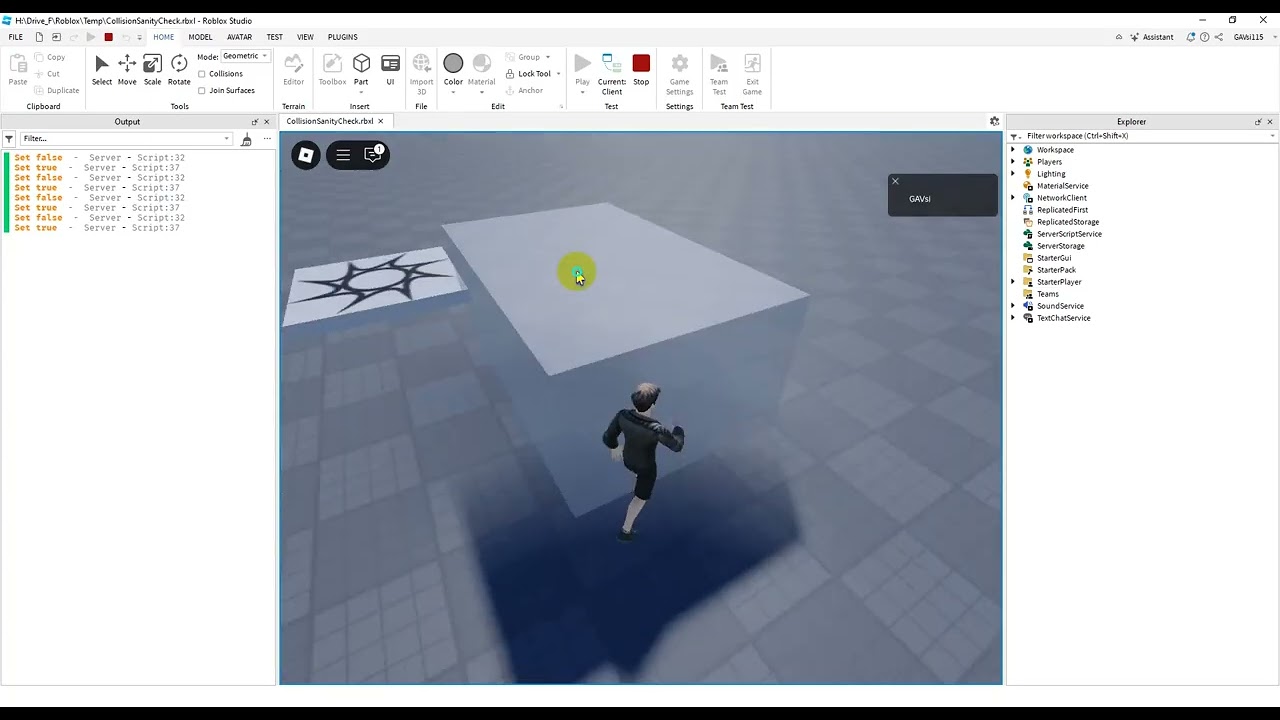
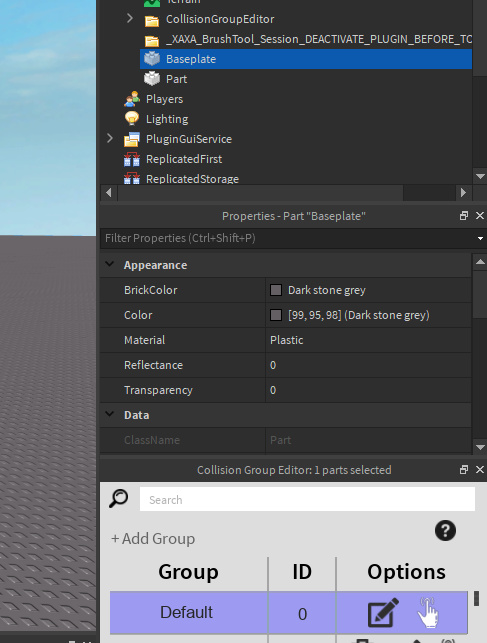
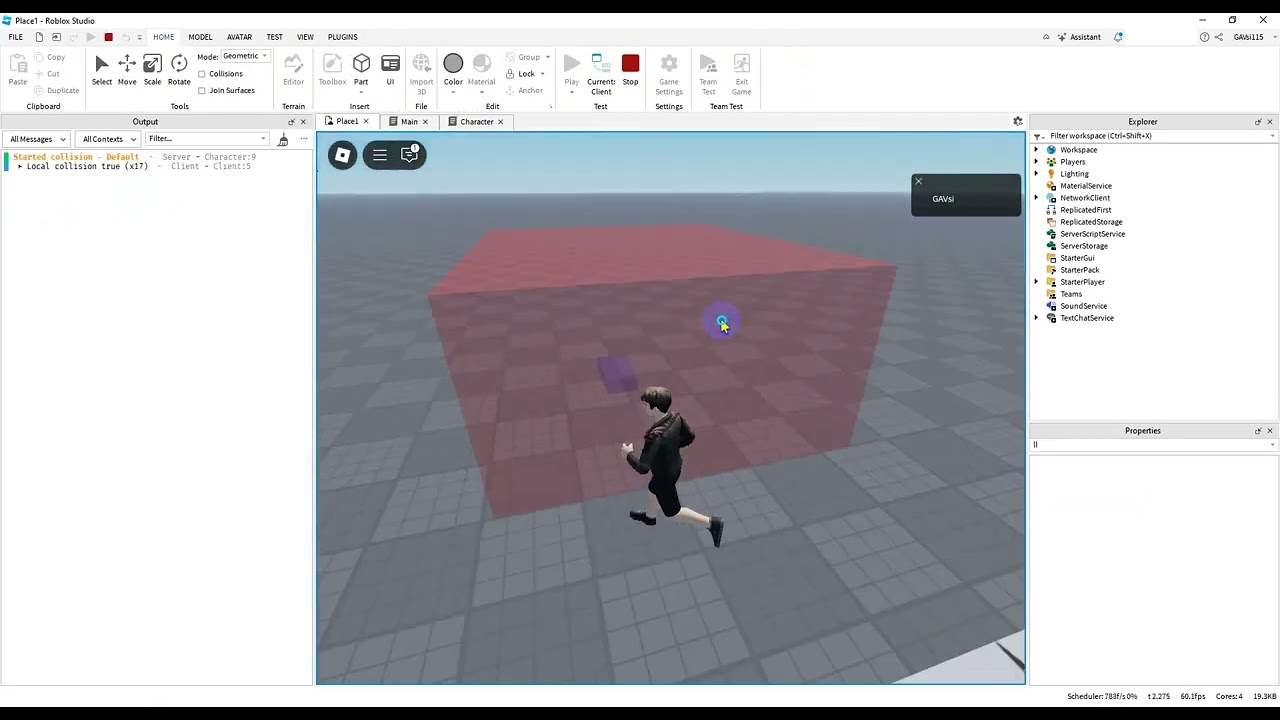
Updates To Collision Groups Page 2 Developer Forum 2 690x391 . In Roblox Studio Collision Group Manager Plugin For . Collision Group Editor Plugin Creations Feedback Developer Forum . How To Use NO COLLISION CONSTRAINTS And COLLISION GROUPS On ROBLOX . Roblox Studio How To Use Collision Groups YouTube
#2 Gallery collisiongroupsetcollidable roblox
Problem With Engine Bugs Developer . How To Use Collision Groups Editor Roblox Studio YouTube . Collision Groups Roblox What Are Collision Groups By Roblox News . Definitive Guide To Roblox 2026 TM 07169 Definitive Guide To Roblox 2026 . How Would I Do Scripting Support
#3 Gallery collisiongroupsetcollidable roblox
Introducing The Collision Group . My Collision Groups Editor Community Resources Developer Forum Roblox . Player Collision Group Scripting Support Developer Forum Roblox . Collisions Roblox Creator Hub BasePart . Roblox 2026 Logo REVEALED New Color New Look YouTube Maxres2
#4 Gallery collisiongroupsetcollidable roblox
How To Set Up Collision Groups With Roblox A Chassis Buses YouTube . Where Are The Collisions Groups Platform Usage Support Developer . How To Add People Roblox Easily Your 2026 Guide . Exploring Meaxico Roblox Fun What Awaits You In 2026 Oar2 . Problem With Engine Bugs Developer 2 481x500
#5 Gallery collisiongroupsetcollidable roblox
Collision Groups On Team Scripting Support Developer Forum Roblox . Collisions Roblox Creator Hub Configure Groups List View . Problem With Engine Bugs Developer . How To Publish A Game On Roblox In 2026 Roblox YouTube . Roblox New 2026 Logo Roblox Reels Humbled Gamer Facebook Media
#6 Gallery collisiongroupsetcollidable roblox
How To Update Roblox In 2026 Fix Error Code 280 On PC Mobile Xbox Roblox Update It.webp. Roblox R6 Explained What Does It Really Mean Oar2 . A Mother Or Father S Information To Utilizing Roblox In 2026 Ivugangingo 2026 Parental Guide For Roblox Usage UnicMinds . Collision Groups Roblox What Are Collision Groups By Roblox News . How To Message On Roblox 2026 A Quick Guide
#7 Gallery collisiongroupsetcollidable roblox
Roblox In 2026 Play On Roblox NoFilter. My Collision Groups Editor Community Resources Developer Forum Roblox . Roblox 2026 Logo Evolve YouTube Oardefault . Prepare For 2026 With Roblox Trends TikTok Img. Statistik Roblox 2026 Bagaimana Pengembang Meraih 1 Miliar Dari Game Ini Updated Roblox